
Commercial properties can become more vulnerable when staff leave for the day. Warehouses, offices, construction sites, retail premises and industrial facilities may be unattended for long periods, creating opportunities for trespassing, theft, vandalism and other security incidents.
Mobile patrols provide businesses with a flexible way to maintain a visible security presence without having a security officer permanently stationed at the property.
At Partisan Protective Services, mobile patrol programs can be tailored around the property’s operating hours, identified risks and existing security measures.
What Are Mobile Security Patrols?
Mobile security patrols involve licensed security officers attending a property at agreed times to carry out specific security checks.
Depending on the site and security plan, officers may inspect perimeter fencing, gates, doors, loading areas, car parks, storage areas and other vulnerable locations.
Patrols can be scheduled, randomised or used alongside alarm response services. This flexibility makes them suitable for businesses that require regular physical security checks but may not need a static security officer on-site continuously.
For a broader overview of patrol services, see our guide to mobile patrol security services in Sydney.
How Do Mobile Patrols Help Protect Commercial Properties?
One of the main advantages of mobile patrols is their physical presence.
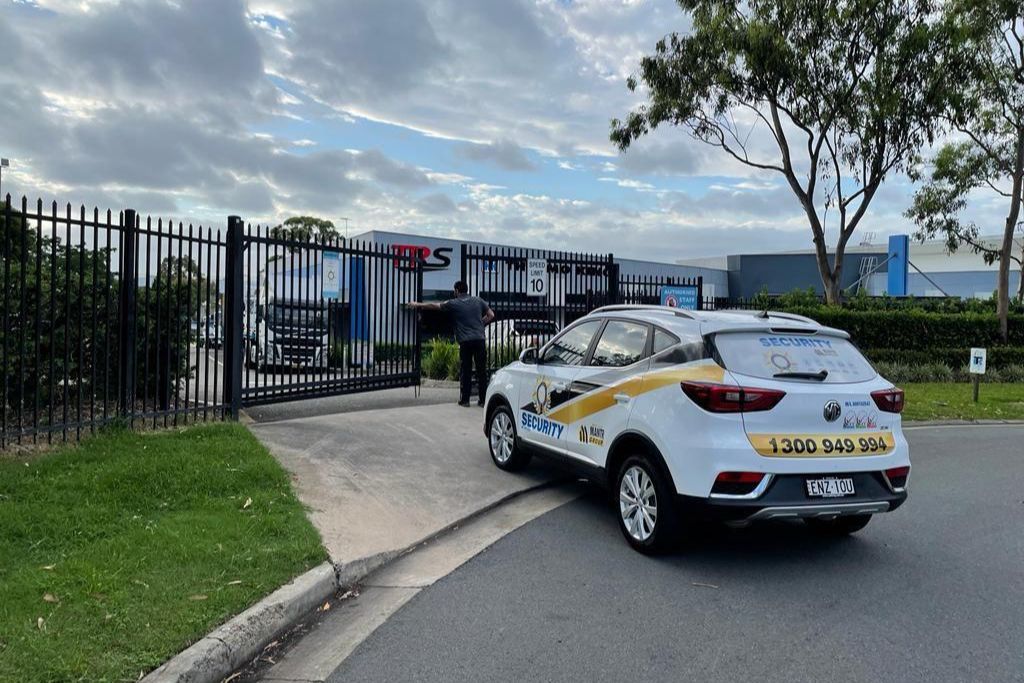
A marked security vehicle and uniformed security officer attending a property can make it clear that the site is being actively checked rather than left unattended.
However, an effective patrol should involve more than simply driving past the property.
Officers should follow documented site instructions and check the areas identified as important to the client and their security provider.
These checks may include:
- doors, gates and other entry points
- perimeter fencing
- loading docks and delivery areas
- car parks and external areas
- signs of attempted entry or property damage
- suspicious vehicles or activity
- lighting and other visible site conditions
- nominated equipment or storage areas.
Any concerns identified during the patrol can then be documented and escalated according to the agreed site procedures.
Scheduled and Random Mobile Patrols
Businesses do not necessarily need every patrol to occur at exactly the same time.
Scheduled patrols can be useful when a specific task must be completed, such as checking a property after staff have left or carrying out a lock-up procedure.
Random patrols introduce less predictability into the security routine.
For example, warehouses and industrial sites may benefit from varying patrol times so there is not an obvious pattern to when the property will be checked.
Our guide to random mobile patrols for Sydney warehouses explains how this approach can be used for industrial and storage facilities.

How Often Should a Business Arrange Mobile Patrols?
There is no single patrol frequency that suits every commercial property.
The appropriate frequency can depend on:
- the property’s location
- operating hours
- previous security incidents
- value and type of assets stored on-site
- accessibility of the property
- surrounding activity
- periods when the site is unattended
- existing CCTV, alarm and access control systems.
A lower-risk office may have very different requirements from a construction site containing equipment and materials or a warehouse operating in an industrial precinct.
Our guide to how often a mobile patrol should check a commercial property looks at these factors in more detail.
Mobile Patrols and Alarm Response
Mobile patrols can also form part of an alarm response strategy.
When an alarm is activated, having an established response procedure means the monitoring centre knows who should be contacted and what action should follow.
Where a security patrol response has been arranged, an officer can attend the property in accordance with those instructions, inspect accessible areas and report what they observe.
This provides businesses with a physical response option rather than relying solely on an alarm notification.
Mobile Patrols and CCTV
CCTV and mobile patrols perform different functions but can complement each other.
CCTV provides visual coverage and recorded footage of selected areas, while mobile patrol officers can physically inspect parts of the property that form part of their patrol instructions.
For some businesses, combining CCTV, alarm monitoring, access control and mobile patrols creates several layers of security rather than relying on one measure alone.
Our guide to layered security for commercial properties explains how these different security measures can work together.
Mobile Patrols vs Static Security Guards
Not every business requires a security officer permanently stationed at its premises.
A static security guard may be appropriate where a property requires continuous access management, visitor control or an ongoing on-site security presence.
Mobile patrols can be better suited to sites requiring periodic checks, after-hours inspections or a physical response capability without continuous guarding.
Some properties use both.
For a detailed comparison, read Static Guards vs Mobile Patrols: Which Security Model Fits Your Business?

When Are Overnight Security Patrols Worth Considering?
The hours after employees leave can create a different risk environment.
Commercial properties may have fewer people nearby to notice unusual activity, while equipment, stock and other assets can remain on-site.
Businesses may consider overnight patrols when they have experienced previous incidents, operate in an isolated location, have valuable assets on the property or regularly remain unattended for extended periods.
Our article 5 Signs You Need Overnight Security Patrols at Your Site provides further guidance.
What Should You Expect From a Professional Mobile Patrol?
A professional patrol service should be based on clearly defined instructions rather than generic drive-by visits.
Before patrols begin, the security provider should understand the property, identify priority areas and establish what officers are expected to check.
The patrol process may include:
- defined patrol points
- scheduled or random attendance
- site-specific instructions
- incident escalation procedures
- patrol verification
- reporting of identified issues
- coordination with alarm monitoring or other security services where required.
This provides greater accountability and gives businesses useful information about what occurred during each patrol.
Mobile Patrol Reporting and Verification
Reporting is an important part of an effective patrol program.
If an officer identifies a damaged gate, unsecured door, suspicious activity or another concern, the information should be recorded so appropriate action can be taken.
Over time, these reports may also help identify recurring vulnerabilities or areas that need additional attention.
Partisan Protective Services uses patrol verification and reporting processes to support accountability across mobile patrol operations.
Which Businesses Can Benefit From Mobile Patrols?
Mobile patrols can be used across many types of commercial and industrial properties, including offices, warehouses, construction sites, retail premises, storage facilities, strata properties, vacant buildings and multi-site operations.
The important consideration is not simply the type of business, but what happens at the property when staff are not present.
A security assessment can help determine whether patrols, static guards, alarm monitoring, CCTV or a combination of measures is appropriate.
Build a Mobile Patrol Strategy Around Your Property
Mobile patrols are most effective when the patrol program reflects the actual risks and operating conditions of the site.
Rather than using the same approach for every property, businesses should consider when their site is most vulnerable, which areas require inspection, how often checks should occur and what should happen when an officer identifies a problem.
Partisan Protective Services provides mobile patrol and alarm response services for commercial and industrial properties across Sydney, with patrol arrangements tailored to individual site requirements.


